


 Karin Bäumler
Partner Success: How Collaboration Drives Growth
New markets. More growth. Marco Coriand explains why Natuvion is investing in strong partnerships and how collaboration helps accelerate...

Migrating from SAP ECC to SAP S/4HANA involves much more than simply moving data—it requires a deep understanding of your existing data. This is precisely where the SAP Business Transformation Center (BTC) Digital Blueprint comes in. Karin Bäumler explains what makes it so effective.
The Digital Blueprint forms the core of the analysis phase of a transformation and creates the necessary transparency to enable a well-founded and targeted transformation.
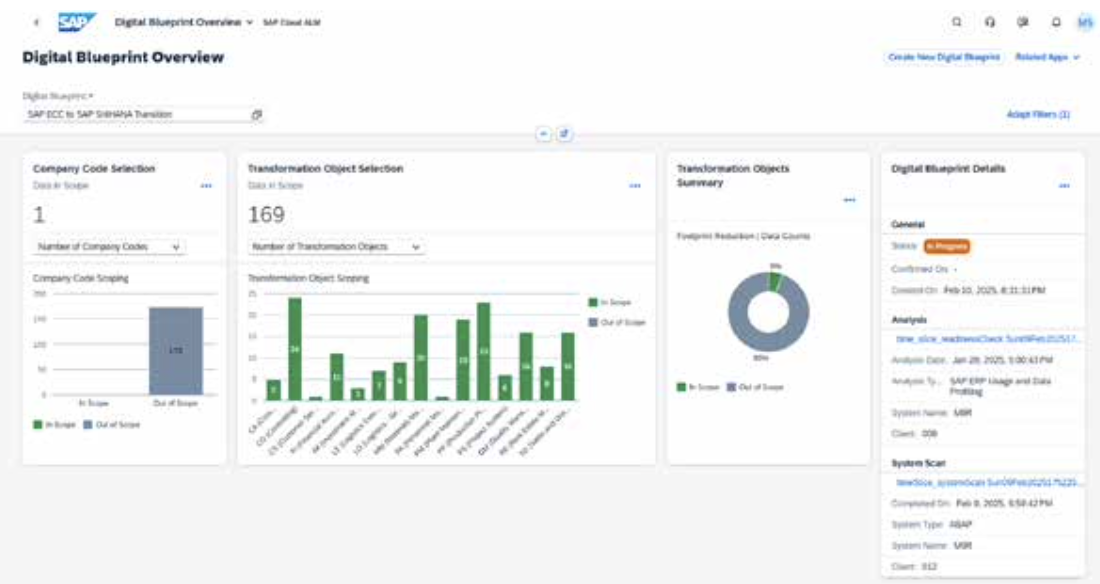
The Digital Blueprint is much more than a static report. It combines data from the SAP Readiness Check with the results of a system scan that accesses the source system directly. This combination provides you with a comprehensive overview of:
This detailed analysis not only enables you to identify which data is truly business-critical, but also to identify and specifically exclude unnecessary legacy data. This not only reduces the migration volume, but also optimizes the performance of your new system.
The major advantage of the Digital Blueprint lies in its ability to create a foundation for data-based decision-making. Automated scans deliver objective insights that you can visualize in interactive dashboards. This allows departments and IT to jointly define the scope of migration – transparently, comprehensibly, and without manual Excel evaluations. You can use the Digital Blueprint to define the company codes and fiscal years relevant for the migration.
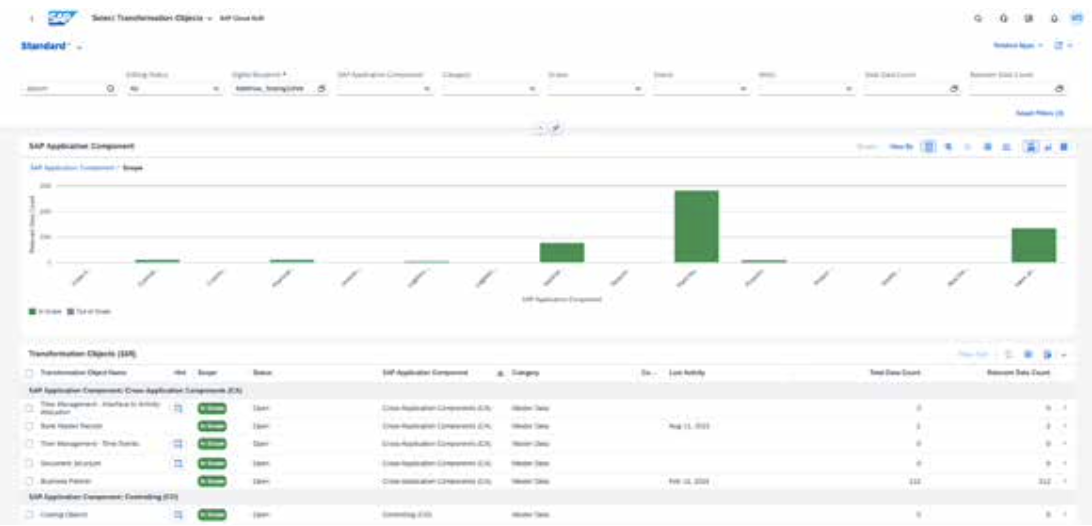
Once the analysis phase is complete, the path to migration is seamlessly integrated. The Digital Blueprint serves as the basis for creating transformation models that automate and standardize the switch to SAP S/4HANA. You can use defined filters and rules to transform the data efficiently.
The Digital Blueprint is the key to a successful SAP S/4HANA transformation. It ensures maximum transparency in the analysis phase and creates the basis for an automated, standardized, and low-risk migration. Companies gain not only control over their data, but also the certainty that they are making exactly the right decisions for their digital future.


New markets. More growth. Marco Coriand explains why Natuvion is investing in strong partnerships and how collaboration helps accelerate...

2026 Transformation Study: Why flexible, AI-powered data transformation is key to successful M&A transactions.

Natuvion IT Transformation Study: Why data quality is the key to successful SAP S/4HANA transformations and enterprise AI.