


 Philipp von der Brüggen
Natuvion and PwC launch Transformation Roadbook: Insights from over 1,000 transformations
Natuvion and PwC present the Transformation Roadbook: insights from over 1,000 IT transformations, with strategies, checklists and a step by step...

Greenfield or Brownfield? It sounds like a strategic decision. But in many cases, it's the first mistake. Why? Because it assumes that every step of a transformation can be planned in advance. That's rarely the case. The uncomfortable truth is that your plan will probably change.
According to the 2026 Transformation Study, an IT transformation takes an average of two years. That's two years in which business models evolve, regulations change, data landscapes shift, and internal priorities move. The result? Your original plan is unlikely to survive unchanged. The numbers speak for themselves: 71% of companies adjust their approach during a transformation project. That's one of the latest findings from the 2026 Transformation Study, conducted annually by Natuvion and NTT DATA Business Solutions. Yet many companies still commit to a fixed approach from the start. Greenfield means building from scratch. Brownfield means preserving as much of the existing system as possible.
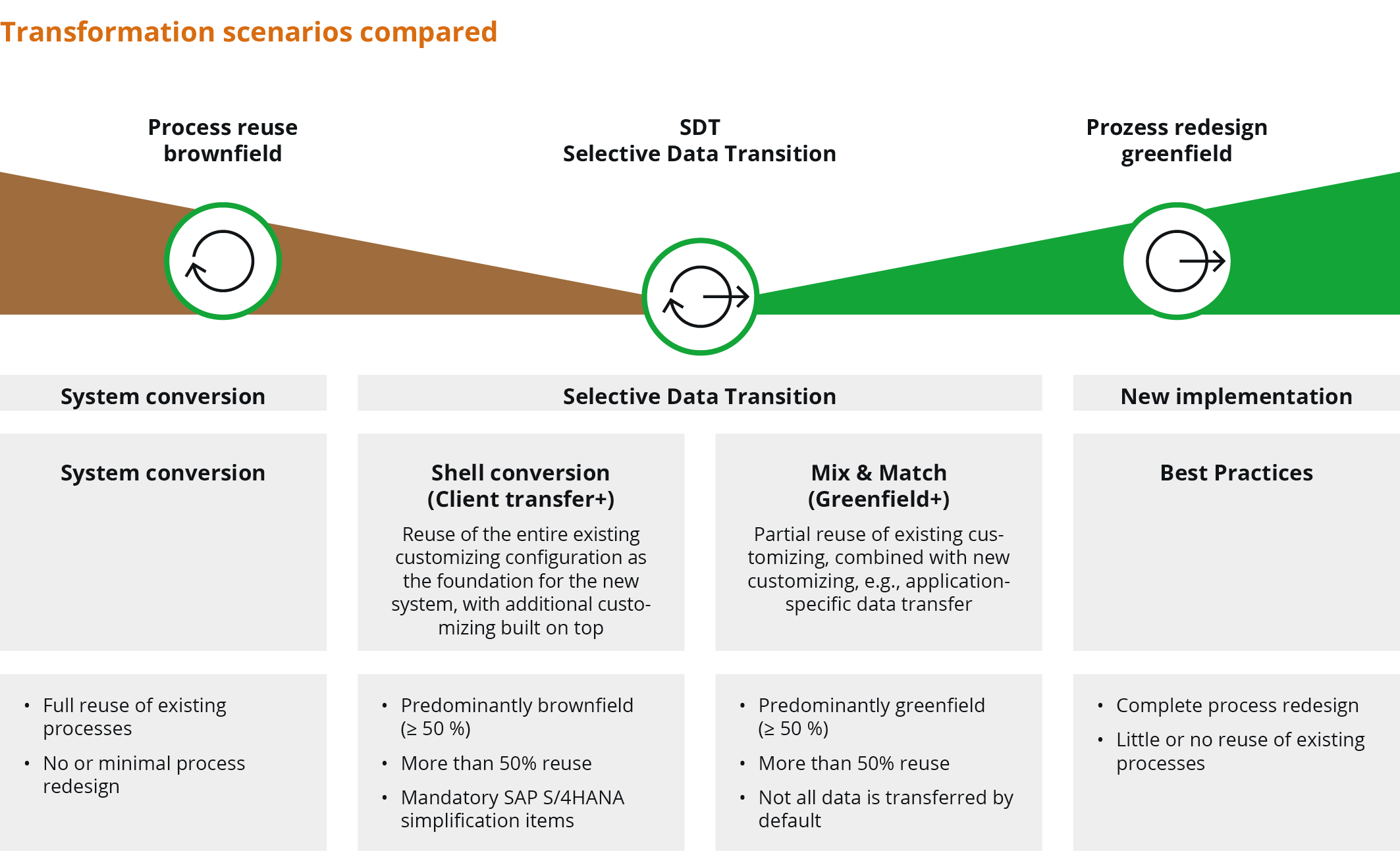
On paper, both approaches seem straightforward. In practice, that rigidity creates risks. Neither approach is designed to accommodate major changes along the way. Yet that's often exactly what's needed. As projects progress, unexpected challenges emerge. Critical data turns out to be missing. Legacy issues are more complex than anticipated. Processes can't simply be redesigned. Regulatory requirements introduce new constraints.
And then? Costs rise. Strategies need to be revised, timelines slip, and budgets spiral. Not because the teams lack expertise, but because the initial decision left too little room to adapt.
Here's where the thinking needs to change: It's not about choosing the right methodology. The more important question isn't "Greenfield or Brownfield?". It's "What happens if our initial assumptions turn out to be wrong?". Can you still migrate data? Adjust processes? Remove legacy data and structures? Or are you locked into your original decision? This is where successful transformations stand apart. Companies that succeed don't just select an approach. They make sure they can adapt it as requirements change. That's what flexibility means in practice.
This is where Selective Data Transformation comes in. It's not a compromise between Greenfield and Brownfield. It's a way to adjust your transformation strategy during the project without starting from scratch.
And there's one rule that deserves more attention: Never choose tools or partners that support only one approach. Whatever your strategy looks like today, your technology and partners need to support what tomorrow's requirements might demand. Otherwise, you're limiting your options before the project even begins.
In practical terms:
Anything less isn't a reliable plan. It's a risk.
The biggest mistake isn't choosing Greenfield or Brownfield. It's committing to an approach that can't evolve. Transformation isn't a fixed blueprint. It's a moving target. That's why success doesn't necessarily come down to having the best initial plan. It comes down to being able to adapt when circumstances change. Companies that prioritize flexibility today keep their options open for tomorrow. Those that lock themselves into a rigid approach may pay the price later. Greenfield or Brownfield isn't the most important decision. Flexibility is.


Natuvion and PwC present the Transformation Roadbook: insights from over 1,000 IT transformations, with strategies, checklists and a step by step...
Discover why flexibility matters in IT transformations and how Selective Data Transformation helps you adapt your migration strategy as requirements...

Discover how Komm.ONE used the Natuvion Data Conversion Suite to standardize SAP S/4HANA migrations for nearly 1,000 clients.