


 Philipp von der Brüggen
Natuvion IT Transformation Study: data quality is a key success factor for enterprise AI
Natuvion IT Transformation Study: Why data quality is the key to successful SAP S/4HANA transformations and enterprise AI.
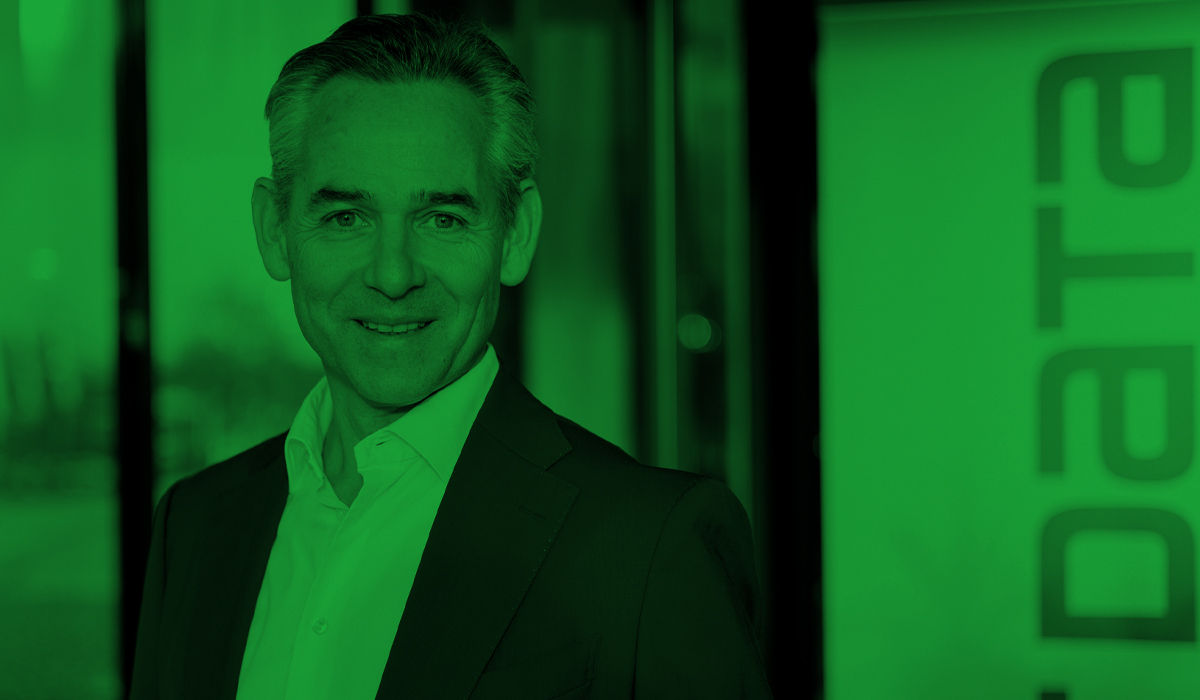
The world seems to be in a state of perpetual crisis right now: geopolitical tensions, economic uncertainties, technological upheaval. And right in the middle of it all are entrepreneurs who have to find their way. One person who does exactly that every day is Norbert Rotter, CEO of NTT DATA Business Solutions – a company with over 18,500 employees worldwide. But anyone expecting a sober managerial statement here is in for a surprise. Rotter thinks in terms of movement, not stagnation. And above all: he believes in progress. A conversation with Philipp von der Brüggen.
Norbert Rotter: We are seeing a great deal of uncertainty, particularly among small and medium-sized enterprises. The automotive and mechanical engineering sectors, in particular, are struggling significantly. China is no longer a driver of growth, and the transition to e-mobility is not proceeding smoothly. On top of that, Germany is unfortunately too slow to implement many things. There is also a tendency to complain more than take action. As a company, we therefore deliberately focus on a performance-based approach. For me, that means going the extra mile; simply meeting the standard is no longer enough to win over customers for the long term.
Norbert Rotter: We have to impress with the complete package. It’s like a restaurant: good food alone isn’t enough; service, friendliness, and atmosphere are also crucial – the overall experience is what counts. For us, this starts with our employees. When they enjoy working here, they reflect that internally and, above all, externally to our customers. Corporate culture has long since ceased to be a "nice-to-have"; it is a critical success factor.
Norbert Rotter: Absolutely. We are seeing more insolvencies than we have in a long time. Many companies are struggling to adapt. At the same time, it is becoming clear that dependencies need to be reduced. As I mentioned, trade with China is declining, while India is becoming increasingly attractive. Companies must constantly re-evaluate their portfolios and partnerships. The problem is that when economic times get tough, investments are held back – especially in IT and digitalization – and that is actually exactly the wrong reaction.
Norbert Rotter: To some extent, yes. Looking back, there was certainly a degree of naivety. As long as things were going well, the focus was heavily on a few major providers. That entails risks and leads to increasing monopolization. This trend is further intensified in the field of AI, where computing power and scalability are critical factors. That is why it is important to broaden one’s base – both technologically and geographically.
Norbert Rotter: No, but we are seeing a pendulum that swung heavily toward globalization for a long time and is now swinging back somewhat. Nevertheless, I firmly believe in open trade. But you must not make yourself dependent. My personal motto is: You always need to have enough options. That applies to companies just as much as to every individual.
Norbert Rotter: An IT architecture for 2035 requires global principles, common standards, and a clear overarching technological framework. At the same time, it must be capable of operating effectively at a regional level – such as in Europe, the Americas, or Asia – because markets, regulations, and expectations differ. Regionally oriented IT structures must be deliberately aligned with one another. IT will no longer be completely free from regulation; the key lies in intelligently combining a global approach with regional sovereignty.
Norbert Rotter: Above all, with a view to increasing efficiency. AI can already provide us with enormous support today – for instance, in software development. Code is generated faster, and processes are optimized. But let’s not kid ourselves: efficiency has its limits, too. You can keep optimizing processes indefinitely, but customer purchasing power doesn’t necessarily grow at the same rate.
Norbert Rotter: Clearly, regarding monopolization. The big players are getting bigger and bigger and can simply buy up innovations. And, of course, AI can also be misused – just like any technology.
Norbert Rotter: You won’t be replaced by AI, but by people who know how to use AI better. Anyone who doesn’t engage with AI will eventually run into problems. Many traditional office jobs – such as accounting and controlling, but also parts of software development - will be particularly affected. Professions requiring physical labor and practical skills, like those in the hospitality or sports sectors, are likely less affected for the time being. But ultimately, the fact remains: AI affects us all.
Norbert Rotter: It can certainly help, but it is no panacea. We are already seeing changes in the labor market. No one knows exactly where this will lead. However, the past shows that technologies repeatedly replace jobs while simultaneously creating new ones. I assume it will be similar this time.
Norbert Rotter: For me, optimism is part of good leadership. As a manager – and above all as a CEO – you solve problems every day. If you approach this with a purely negative mindset, you won’t make any progress. Optimism isn’t naivety; it’s an attitude. When you believe you can improve things, you inspire others, too.
Norbert Rotter: By leading by example and actively fostering an entrepreneurial mindset. We are service providers, so each of us should aim to make a real difference for our clients. That means more than simply implementing something and then moving on. We must deliver genuine added value throughout the entire process – and beyond. Every single person can contribute to this. It requires a willingness to focus on the results for the client. That is exactly what I mean when I say we must be ready to go the extra mile.
Norbert Rotter: This discussion is nothing new; every generation has viewed the next one critically. I don’t think much of that. Instead, we should support young people, challenge them, and entrust them with responsibility. Ultimately, a society functions best when people take responsibility.
Norbert Rotter: Decidedly positive. Not because everything will simply go smoothly, but because I am convinced that we will find solutions – we have always managed to do so. And that is precisely what it’s all about: actively shaping things instead of just complaining.


Natuvion IT Transformation Study: Why data quality is the key to successful SAP S/4HANA transformations and enterprise AI.
Norbert Rotter, CEO of NTT Data Business Solutions, on data sovereignty, AI, the future of work, and entrepreneurial optimism.

S/4HANA for Utilities: Stadtwerke Saarbrücken Netz AG demonstrates how a complex migration can be planned, executed efficiently, and completed on...